
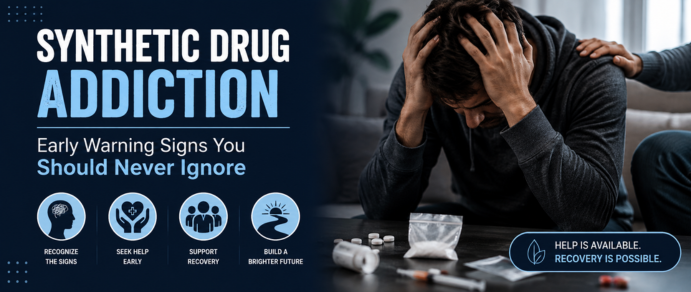
Synthetic Drug Addiction: Early Warning Signs You Should Never Ignore
Synthetic drugs have become an increasing concern because they are often more unpredictable than traditional illicit substances. Manufactured in laboratories to mimic the effects of drugs like cannabis, cocaine, or opioids, these substances frequently contain changing chemical formulas that make their effects difficult to predict. A product purchased under the same name today may contain different ingredients than one sold last month, increasing the risk of dangerous reactions.
This uncertainty has contributed to a rise in emergency medical cases involving severe anxiety, hallucinations, seizures, heart problems, and overdose. In many situations, individuals do not realize the seriousness of their substance use until it begins affecting their relationships, health or daily responsibilities.
Recognizing the early warning signs of addiction can make a meaningful difference. Early intervention allows individuals to receive appropriate care before substance use leads to more serious physical, emotional, or social consequences.
What Are Synthetic Drugs?
Synthetic drugs are man-made substances created to imitate the effects of naturally occurring drugs. Instead of being derived from plants, they are produced using chemical compounds that are often modified to avoid legal restrictions. Because these formulas change regularly, synthetic drugs can have unpredictable effects even when sold under familiar names.
Some products are marketed as harmless items such as herbal incense, bath salts, or research chemicals. These labels can be misleading and should not be mistaken for signs of safety. Many synthetic substances are significantly more potent than the drugs they are designed to mimic.
Common Examples
Some of the most commonly encountered synthetic drugs include:
- Synthetic cannabinoids (K2 or Spice)
- Synthetic cathinones (commonly known as bath salts)
- Illegally manufactured fentanyl
- Designer stimulants
- Novel psychoactive substances (NPS)
Synthetic Drugs vs. Traditional Drugs
| Traditional Drugs | Synthetic Drugs |
|---|---|
| Usually derived from natural sources | Produced using laboratory-made chemicals |
| More consistent composition | Ingredients may change between batches |
| Effects are relatively predictable | Effects can vary widely from one use to another |
| Better studied through research | Many compounds have limited safety data |
Because of these differences, healthcare providers often face additional challenges when diagnosing and treating synthetic drug-related emergencies.
Why Synthetic Drugs Are So Dangerous
One of the biggest dangers of synthetic drugs is that users rarely know what they are consuming. Manufacturers frequently alter chemical ingredients, making it difficult to predict the strength or effects of a particular product. Even experienced users may have severe reactions after taking what appears to be the same substance they used before.
These drugs can affect both physical and mental health within a short period. Depending on the chemical composition, a person may experience rapid heart rate, dangerously high blood pressure, breathing difficulties, or seizures. Others may develop intense paranoia, panic attacks, hallucinations, or aggressive behavior that requires immediate medical attention.
Another major concern is the increased risk of overdose. Since the potency of synthetic drugs can vary significantly, a dose that seemed manageable previously may become life-threatening the next time. In some cases, synthetic substances are also mixed with other drugs without the user’s knowledge, further increasing the risk of serious complications.
Early Warning Signs of Synthetic Drug Addiction
Addiction often develops gradually, with subtle changes appearing before obvious physical symptoms. Looking at a person’s overall behavior rather than a single warning sign provides a clearer picture of whether professional help may be needed.
Emotional and Behavioral Changes
Many people struggling with synthetic drug use begin to experience noticeable shifts in their emotions and daily behavior. Mood swings, increased irritability, anxiety, or emotional withdrawal are common early indicators. They may also lose interest in hobbies, become secretive, or neglect responsibilities at work, school, or home.
Other behavioral changes may include:
- Frequently lying about their whereabouts
- Spending more time with new social groups
- Missing important commitments
- Unexplained financial problems
- Taking unusual risks or making impulsive decisions
Physical and Psychological Signs
Synthetic drugs can affect nearly every system in the body, so physical symptoms often vary from one individual to another. Changes in appearance or overall health may become more noticeable as substance use continues.
Common signs include:
- Bloodshot or glassy eyes
- Sudden weight loss
- Poor personal hygiene
- Tremors or poor coordination
- Changes in sleeping or eating habits
Psychological symptoms may develop alongside these physical changes. Difficulty concentrating, memory problems, suspicious thinking, and episodes of confusion can interfere with work, education, and relationships. Some individuals may also experience hallucinations or paranoia, particularly after prolonged or repeated use.
Recognizing several of these warning signs together, rather than focusing on one symptom alone can help families identify when it is time to seek professional support.
Short-Term and Long-Term Effects of Synthetic Drug Use
The effects of synthetic drugs depend on the specific chemicals involved, how much was used, and an individual’s overall health. While some reactions appear immediately, others develop gradually with continued use.
| Short-Term Effects | Long-Term Effects |
|---|---|
| Rapid heart rate | Persistent anxiety or depression |
| High blood pressure | Memory and concentration problems |
| Nausea and vomiting | Sleep disturbances |
| Hallucinations or paranoia | Increased risk of psychosis |
| Aggressive behavior | Heart, liver, or kidney damage |
| Seizures or overdose | Relationship, financial, and career difficulties |
Long-term use can also make it increasingly difficult to maintain healthy relationships, meet work or academic responsibilities, and manage everyday stress without relying on substances. As dependence grows, recovery often requires comprehensive treatment that addresses both the addiction itself and the underlying factors contributing to substance use.
Can Synthetic Drug Addiction Be Treated?
Yes. Although synthetic drug addiction can be complex, recovery is possible with timely and comprehensive care. Because these substances often contain unknown or changing chemicals, treatment begins with a thorough assessment to understand an individual’s physical health, mental well-being, and substance use history. This allows healthcare professionals to create a personalized plan rather than relying on a one-size-fits-all approach.
Effective synthetic drug addiction treatment addresses more than the immediate effects of drug use. It focuses on helping individuals regain physical stability, understand the underlying causes of addiction, develop healthier coping skills, and build a strong foundation for long-term recovery.
What Does Treatment Typically Include?
Recovery often involves several levels of care that work together to support lasting change.
| Treatment Approach | How It Supports Recovery |
|---|---|
| Medical Detox | Helps manage withdrawal safely under medical supervision. |
| Residential Rehab | Provides a structured, substance-free environment focused on recovery. |
| Individual Counseling | Explores personal triggers, emotions, and recovery goals. |
| Group & Family Therapy | Builds support, improves communication, and strengthens relationships. |
| Behavioral Therapy for Addiction | Helps replace unhealthy thought patterns and behaviors with healthier coping strategies. |
| Aftercare Planning | Supports long-term recovery through continued care and relapse prevention. |
Medical detox is often the first step, particularly for individuals experiencing withdrawal symptoms or physical dependence. Once medically stable, many people transition into residential treatment, where they can focus on recovery without the distractions and triggers of everyday life.
Therapy remains an essential part of treatment for synthetic drug addiction. Individual counseling helps people understand why substance use developed, while group and family therapy encourage connection, accountability, and healthier communication. Evidence-based approaches such as behavioral therapy for addiction, including Cognitive Behavioral Therapy (CBT), teach practical skills for managing cravings, handling stress, and preventing relapse.
When Should You Seek Professional Help?
Many people wait until addiction has significantly affected their health or personal life before seeking treatment. However, early intervention often leads to better recovery outcomes and may reduce the risk of serious complications.
Professional help should be considered if someone:
- Finds it difficult to stop using despite wanting to quit
- Experiences strong cravings or withdrawal symptoms
- Continues using despite health, work, or relationship problems
- Begins neglecting daily responsibilities
- Takes increasing risks to obtain or use drugs
Ignoring these warning signs can allow addiction to progress, making recovery more challenging over time.
If you or someone you care about is experiencing these symptoms, learning more about Synthetic Drug Addiction Treatment Center can provide a better understanding of the treatment options available and what to expect during the recovery process.
Understanding Withdrawal During Recovery
Withdrawal is a normal part of recovery for many individuals, but the experience varies depending on the type of synthetic drug used, the duration of use, and overall health. Because synthetic substances contain unpredictable ingredients, withdrawal symptoms can differ from one person to another.
People recovering from stimulant-like synthetic drugs commonly experience fatigue, depression, anxiety, sleep disturbances, difficulty concentrating, and intense cravings. While these symptoms can be uncomfortable, they are often easier to manage with professional medical and therapeutic support.
Those interested in learning more about stimulant-related withdrawal may also find our article on Cocaine Withdrawal: Symptoms, Timeline, Stages & Treatment helpful. It explains how withdrawal may progress and why professional care can support a safer, more comfortable recovery.
Tips to Support Long-Term Addiction Recovery
Completing treatment is an important milestone, but maintaining recovery requires ongoing commitment. Healthy routines and a strong support system can help individuals navigate challenges while reducing the risk of relapse.
Some strategies that support long-term addiction recovery include:
- Follow a consistent daily routine with regular sleep, balanced nutrition, and physical activity.
- Continue therapy to strengthen coping skills and address new challenges as they arise.
- Attend support groups to stay connected with others who understand the recovery journey.
- Encourage family involvement, as healthy communication and support can strengthen long-term recovery.
- Prioritize mental wellness through stress management, mindfulness, or other healthy coping techniques.
- Review relapse prevention strategies regularly so they remain effective as life circumstances change.
Recovery is an ongoing process rather than a single event. Small, consistent steps often have the greatest impact over time.
Final Thoughts
Synthetic drug addiction can affect every aspect of a person’s life, but early recognition and professional treatment can make a meaningful difference. Understanding the warning signs, seeking help promptly, and participating in evidence-based treatment can improve the chances of long-term recovery.
At Find Luxury Rehab, we believe that finding the right treatment environment can make a meaningful difference in long-term recovery. With personalized care, compassionate support, and a comprehensive treatment approach, individuals and families can move forward with greater confidence and hope.
Frequently Asked Questions
Synthetic drugs often contain unknown or frequently changing chemicals. This makes their effects unpredictable and increases the risk of severe reactions, overdose, and other medical emergencies.
While addiction develops differently for everyone, some synthetic drugs are highly potent and can lead to dependence more quickly than expected, especially with repeated use.
Professional treatment is strongly recommended because synthetic drugs can cause unpredictable physical and psychological effects. Medical supervision and therapy provide safer, more effective support than attempting recovery alone.
Recovery timelines vary depending on the substance used, the severity of addiction, overall health, and ongoing participation in treatment and aftercare. Recovery is an ongoing process rather than a fixed timeline.
Yes. Family involvement can improve communication, rebuild trust, and create a more supportive environment, especially when combined with professional family therapy.