
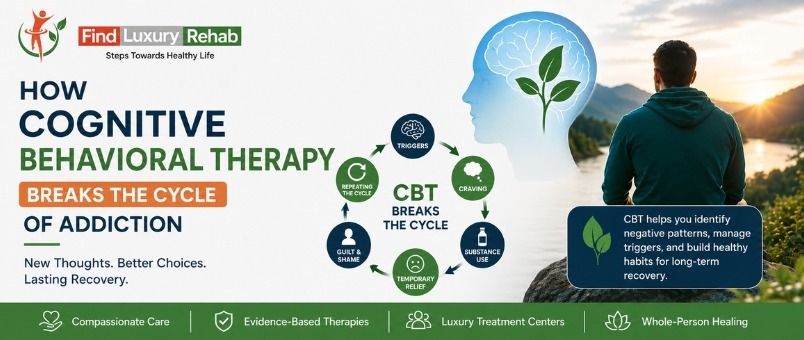
How Cognitive Behavioral Therapy Breaks the Cycle of Addiction
Addiction rarely feels like a choice once it takes hold. It feels like a loop you can’t step out of a trigger, a craving, a moment of relief, and then the guilt that sets the whole cycle spinning again. Anyone who has watched a loved one struggle with substance use, or lived through it themselves, knows how exhausting that loop can be.
This is exactly why Cognitive Behavioral Therapy (CBT) has become one of the most trusted, evidence-based tools in addiction treatment. It doesn’t just address the substance use itself it goes after the thought patterns that keep the cycle running. For individuals in drug rehabilitation, alcohol addiction treatment, or dual diagnosis care, CBT offers a practical, structured path toward lasting change.
In this article, we’ll break down what CBT actually is, how the addiction cycle works, and exactly how this therapy interrupts it, step by step.
What Is Cognitive Behavioral Therapy (CBT)?
Cognitive Behavioral Therapy is a type of talk therapy. It is built on a simple idea. Our thoughts, our feelings, and our actions are all connected. What we think affects how we feel, and how we feel affects what we do.
For someone dealing with addiction, this often plays out like this. A hard thought pops up, such as “I cannot handle this.” That thought brings on a feeling, like stress or shame. That feeling then leads to an action, such as turning to drugs or alcohol. CBT teaches people to notice this pattern as it happens, so they can interrupt it before it leads to substance use.
CBT does not spend much time digging into the distant past. It stays focused on the present. A trained therapist works with the person to spot unhelpful thoughts, question whether those thoughts are actually true, and slowly replace them with better ones. Because CBT is so clear and practical, it fits well into residential addiction treatment, outpatient care, and long term recovery plans through programs such as Cognitive Behavioral Therapy offered at licensed treatment centers.
Understanding the Cycle of Addiction
To see why CBT works so well, it helps to understand the cycle it’s designed to break:
- Trigger – A person, place, emotion, or memory activates the urge to use.
- Craving – The brain begins signaling an intense desire for the substance.
- Substance Use – The person uses drugs or alcohol to satisfy the craving.
- Temporary Relief – Use brings short-term comfort or numbness.
- Guilt or Shame – Once the relief fades, self-criticism and regret set in.
- Repeating the Cycle – Those painful feelings become new triggers, and the loop starts again.
Without intervention, this cycle can repeat for years, growing stronger with every pass. Effective addiction counseling aims to break the loop at multiple points – not just the moment of use, but the thoughts and emotions that lead up to it.
How Cognitive Behavioral Therapy Breaks the Cycle of Addiction
Identifying Negative Thought Patterns
CBT starts by helping clients recognize automatic, distorted thoughts – like “I’ll never get better” or “One drink won’t hurt.” These thoughts often go unquestioned, yet they quietly fuel cravings. Naming them is the first step toward changing them.
Recognizing Emotional and Environmental Triggers
A therapist helps the client map out their personal triggers — a stressful phone call, a certain neighborhood, loneliness on a Sunday night. Once triggers are identified, they become far easier to plan around.
Developing Healthy Coping Strategies
Instead of relying on substances to manage stress, clients learn practical alternatives: breathing techniques, journaling, calling a support person, or physically leaving a triggering environment. For example, someone who used to drink after work arguments might instead practice a short walk and a scripted self-talk exercise before reacting.
Replacing Self-Destructive Beliefs
Many people in recovery carry deep-seated beliefs like “I’m not worth helping.” CBT works to challenge these beliefs with evidence, gradually replacing them with more balanced, self-compassionate thinking.
Managing Cravings Effectively
Clients learn techniques such as “urge surfing” – observing a craving without acting on it, knowing it will naturally rise and fall within minutes. This reduces the sense of powerlessness that often accompanies cravings.
Building Emotional Resilience
CBT strengthens a person’s ability to tolerate discomfort without immediately escaping it through substance use, an essential skill, since stress and disappointment never fully disappear from life.
Preventing Relapse
Through relapse prevention planning, clients identify high-risk situations in advance and rehearse specific responses, turning what could be a crisis moment into a manageable one.
Creating Long-Term Recovery Habits
Finally, CBT helps clients build sustainable routines, sleep, exercise, structured days, and ongoing self-monitoring, that support recovery well beyond the treatment center.
Benefits of CBT in Addiction Recovery
- Reduces the frequency and intensity of cravings
- Builds practical coping skills that last beyond treatment
- Lowers relapse rates when combined with other therapies
- Improves emotional regulation and self-awareness
- Works effectively alongside medication and medical detox
- Addresses co-occurring mental health symptoms
- Can be delivered individually, in groups, or through family therapy
- Provides measurable, structured progress that clients can track session to session
Who Can Benefit from CBT?
CBT is remarkably versatile. It’s widely used in treating:
- Alcohol addiction
- Drug addiction, including stimulants and opioids
- Prescription drug addiction
- Anxiety disorders
- Depression
- PTSD and trauma-related symptoms
- Dual diagnosis cases, where addiction and a mental health condition occur together
This flexibility makes CBT a cornerstone of mental health treatment programs, not just substance use care. Because addiction and mental health so often overlap, addressing both simultaneously, rather than one after the other, tends to produce more durable results.
CBT as Part of a Comprehensive Treatment Plan
CBT rarely works in isolation. It’s most effective as one part of a broader, coordinated plan that may include:
- Medical detox to safely manage withdrawal
- Individual therapy for personalized, one-on-one work
- Group therapy to build community and shared accountability
- Family therapy to repair relationships and strengthen support systems
- Holistic therapies such as yoga, mindfulness, or fitness
- Aftercare planning to sustain progress after formal treatment ends
Many centers also combine CBT with Dialectical Behavior Therapy, especially for clients managing intense emotional swings alongside substance use.
Why Professional Treatment Matters
Trying to overcome addiction alone can be incredibly difficult. Without professional guidance, many people continue repeating the same cycle of cravings, substance use, and relapse. Professional treatment provides a safe, structured environment where individuals receive personalized care from experienced clinicians and access to evidence-based therapies such as Cognitive Behavioral Therapy (CBT), medical support, and ongoing counseling.
Finding a treatment program that meets your unique needs is an important step in the recovery journey. Factors such as the type of addiction, mental health concerns, treatment approach, location, and level of care all play a role in choosing the right rehab center.
Find Luxury Rehab helps individuals and families connect with trusted addiction treatment centers that offer personalized care plans, evidence-based therapies, medical detox, residential and outpatient programs, and comprehensive aftercare support. By making it easier to compare treatment options, Find Luxury Rehab helps people find a rehab program that aligns with their recovery goals, preferences, and budget.
Recovery is not a journey anyone has to face alone. With the right treatment team, proven therapies, and ongoing support, lasting recovery becomes a realistic and achievable goal.
Conclusion
Addiction is powerful because it rewires the brain’s relationship with thought, emotion, and behavior, but that same connection is exactly what makes recovery possible. Cognitive Behavioral Therapy gives people a practical, proven way to recognize the thought patterns fueling their addiction, replace them with healthier responses, and build the resilience needed to stay well.
Breaking the cycle of addiction takes more than willpower. It takes the right tools, the right support, and often, professional evidence-based addiction therapy. With CBT as a foundation, alongside detox, counseling, and aftercare, long-term recovery isn’t just possible. It’s achievable, one changed thought at a time.
Frequently Asked Questions
CBT helps people notice the thoughts and feelings that lead to cravings, then teaches them practical ways to respond differently. This lowers the chance of going back to substance use.
Yes. CBT is used for alcohol addiction, prescription drug addiction, and illegal drug use, since it focuses on thought patterns that show up across many types of substance use.
CBT is often structured with a set number of sessions, usually around 12 to 20, though this depends on the person and whether it is part of a longer treatment program.
CBT focuses on noticing and changing unhelpful thoughts and actions. Dialectical Behavior Therapy focuses more on managing strong emotions and tolerating distress. Many treatment plans use both together.
Yes. Preventing relapse is a major part of CBT. People learn to spot risky situations early and prepare a clear plan before things become a crisis.
Find Luxury Rehab helps people and families compare trusted treatment centers that offer Cognitive Behavioral Therapy along with personal, evidence based care plans.