
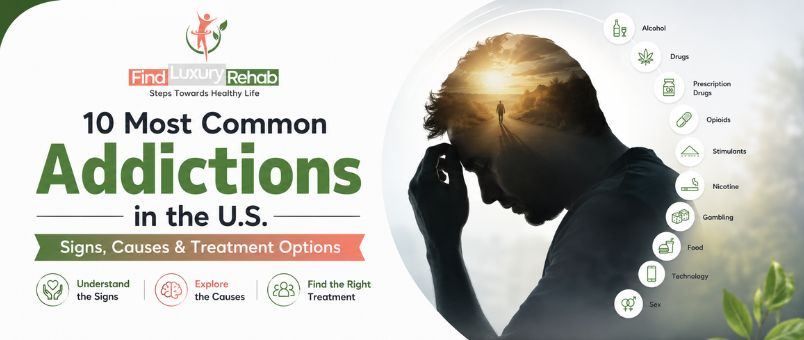
10 Most Common Addictions in the U.S.: Signs, Causes & Treatment Options
Addiction affects millions of people in the United States every year. It can affect a person’s health, relationships, work, finances, and overall quality of life. Addiction does not always look the same. Some people struggle with alcohol or drugs, while others develop problems with behaviors such as gambling.
According to the 2024 National Survey on Drug Use and Health, 48.4 million people age 12 and older had a substance use disorder in the past year. This included 27.9 million people with alcohol use disorder and 20.6 million people with marijuana use disorder. Opioid use disorder affected about 4.8 million people.
Understanding the common types of addiction can help people recognize warning signs and seek support before the problem becomes more serious.
What is Addiction?
Addiction is a condition in which a person continues using a substance or repeating a behavior even when it causes harm.
A person may want to stop but find it difficult to control their use. Repeated substance use can affect the brain systems involved in reward, motivation, decision making, and behavior.
There is no single cause of addiction. It can develop from a combination of biological, psychological, and social factors.
Common risk factors include:
- Family history of addiction
- Long term stress
- Trauma
- Mental health conditions
- Early exposure to drugs or alcohol
- Peer pressure
- Frequent substance use
- Easy access to addictive substances
- Using substances to cope with difficult emotions
Having one risk factor does not mean someone will develop an addiction. Usually, several factors work together.
1. Alcohol Addiction
Alcohol is one of the most common substances connected with addiction in the United States. In 2024, about 27.9 million people age 12 and older had alcohol use disorder.
Alcohol addiction can develop slowly. A person may start drinking socially and later begin drinking more often or in larger amounts. Some people also use alcohol to deal with stress, anxiety, sadness, or other difficult emotions.
Common Signs
- Drinking more than planned
- Strong cravings for alcohol
- Trying to stop but being unable to do so
- Drinking despite health or relationship problems
- Spending a lot of time drinking or recovering from drinking
- Needing more alcohol to feel the same effects
- Experiencing withdrawal symptoms
Treatment Options
Alcohol treatment programs may include counseling, medication, medical care, and different levels of rehabilitation. NIAAA notes that treatment can include behavioral therapies and FDA approved medications such as naltrexone, acamprosate, and disulfiram.
Many alcohol treatment centers provide inpatient and outpatient options based on the person’s needs.
Alcohol withdrawal can sometimes be dangerous, especially after heavy and long term drinking. Anyone with a history of heavy alcohol use should speak with a healthcare professional before stopping suddenly.
2. Nicotine Addiction
Nicotine addiction can develop through cigarettes, cigars, smokeless tobacco, and many vaping products. Nicotine changes the brain and can create strong cravings that make quitting difficult.
A person may continue using nicotine even after deciding to stop. Withdrawal can cause irritability, anxiety, restlessness, difficulty concentrating, and strong cravings.
Common Signs
- Using nicotine soon after waking
- Strong cravings
- Repeated attempts to quit
- Feeling withdrawal symptoms
- Using nicotine even when sick
- Continuing to use nicotine despite wanting to stop
Treatment Options
Nicotine addiction treatment may include counseling, nicotine replacement therapy, and prescription medication. The CDC reports that combining counseling and medication gives people who smoke the best chance of quitting successfully.
Most nicotine rehabs use behavioral therapy to help people understand their triggers, manage cravings, and develop healthier coping skills. Cognitive behavioral therapy and contingency management are commonly used approaches. There is currently no FDA approved medication specifically for cocaine use disorder.
3. Marijuana Addiction
Marijuana is widely used in the United States, but regular use can lead to cannabis use disorder in some people. In 2024, marijuana use disorder was the most common drug use disorder reported in the national survey, affecting about 20.6 million people age 12 and older.
Risk may be higher for people who begin using marijuana at a young age or use it frequently.
Common Signs
- Using more marijuana than planned
- Strong cravings
- Trying to stop without success
- Spending a lot of time using marijuana
- Continuing to use despite problems
- Losing interest in normal activities
- Experiencing withdrawal symptoms after stopping
Treatment Options
Most Marijuana rehabs commonly focus on behavioral therapy and counseling. Treatment can help people understand triggers, manage cravings, and develop healthier ways to deal with stress.
Marijuana addiction treatment centers may offer different levels of care for people dealing with cannabis use disorder.
There is currently no FDA approved medication specifically for marijuana use disorder, so treatment often focuses on behavioral approaches and recovery support.
4. Opioid Addiction
Opioids include prescription pain medicines, heroin, and synthetic opioids such as fentanyl. Opioid use disorder can become serious because opioids can slow breathing and increase the risk of overdose.
SAMHSA estimated that about 4.8 million people age 12 and older had opioid use disorder in 2024.
Common Signs
- Strong opioid cravings
- Taking opioids more often than planned
- Using opioids despite health problems
- Spending a lot of time obtaining or using opioids
- Developing tolerance
- Experiencing withdrawal
- Repeated attempts to stop without success
Treatment Options
Opioid addiction treatment plans may combine medication, counseling, medical care, and recovery support. The right treatment depends on the person’s health, substance use history, and recovery needs.
Opioid addiction treatment centers can provide access to treatment programs designed for opioid use disorder.
Because opioid overdose can be life threatening, people with opioid addiction should have access to professional care and overdose prevention support.
5. Cocaine Addiction
Cocaine is a powerful stimulant that can produce intense feelings of energy and alertness. Its effects can wear off quickly, which may lead some people to use it repeatedly.
Regular cocaine use can affect physical health, mental health, relationships, finances, and daily responsibilities.
Common Signs
- Strong cravings
- Using cocaine more often than planned
- Repeated attempts to quit
- Financial problems
- Problems at work or home
- Sleep problems
- Anxiety or irritability
- Continuing to use despite harmful effects
Treatment Options
Cocaine addiction treatment often focuses on behavioral therapy, relapse prevention, and strategies for managing cravings. There is currently no FDA approved medication specifically for cocaine use disorder.
Most Cocaine addiction treatment centers may provide structured care, therapy, and support for people working toward recovery.
6. Methamphetamine Addiction
Methamphetamine is a powerful stimulant that can have major effects on sleep, appetite, mood, thinking, and behavior.
A person who regularly uses meth may stay awake for long periods, experience strong cravings, lose interest in normal activities, or develop serious problems at home and work.
Common Signs
- Strong cravings
- Staying awake for long periods
- Major changes in appetite
- Mood changes
- Repeated attempts to stop
- Neglecting responsibilities
- Financial problems
- Continuing to use despite harmful effects
Treatment Options
Meth addiction treatment usually focuses on behavioral therapy, recovery support, and relapse prevention. Treatment may also address mental health concerns that occur alongside substance use.
Meth addiction treatment centers can provide structured programs for people who need professional support during recovery.
Recovery can take time. Ongoing treatment can help people identify triggers and build healthier daily routines.
7. Prescription Drug Addiction
Prescription medicines can be helpful when taken as directed. However, some prescription drugs can become addictive when they are misused.
Prescription drug problems can involve opioids, benzodiazepines, stimulants, and certain sleep medicines.
Common Signs
- Taking more medicine than prescribed
- Taking medication more often than directed
- Using another person’s prescription
- Taking medication to feel high or relaxed
- Using medication for a reason other than its medical purpose
- Trying to stop but being unable to do so
Treatment Options
Prescription drug addiction treatment may include medical supervision, medication management, behavioral therapy, and recovery support.
Prescription drug addiction treatment centers can provide programs for people dealing with dependence on prescription opioids, benzodiazepines, and stimulants.
Some prescription medicines should not be stopped suddenly because withdrawal can be serious. A healthcare professional should guide any medication changes.
8. Gambling Addiction
Gambling addiction does not involve a drug, but it can still have serious effects on a person’s life. Gambling disorder is recognized as a behavioral health condition.
A person may continue gambling even after losing money or experiencing problems with family, work, or finances.
Common Signs
- Gambling with more money than planned
- Chasing losses
- Borrowing money to gamble
- Hiding gambling from family
- Feeling restless when trying to stop
- Losing interest in other activities
- Financial problems
- Continuing to gamble despite negative consequences
Treatment Options
Gambling addiction treatment often includes cognitive behavioral therapy. Therapy can help people understand unhealthy thoughts about gambling and develop better ways to manage urges.
Broader addiction treatment centers may also help connect people with appropriate professional support for behavioral addiction concerns.
9. Gaming and Problematic Internet Use
Gaming can be a normal form of entertainment. It becomes a concern when a person loses control over gaming and it begins to interfere with important areas of life.
Possible signs include spending excessive time gaming, missing work or school, losing sleep, avoiding family and friends, and repeatedly failing to reduce gaming time.
Common Signs
- Spending most free time gaming
- Losing sleep because of gaming
- Ignoring work or school responsibilities
- Becoming upset when unable to play
- Losing interest in other activities
- Avoiding family or friends
- Repeatedly trying and failing to reduce gaming
Treatment Options
Gaming addiction treatment may involve cognitive behavioral therapy, family support, healthy routines, and treatment for anxiety or depression when these concerns are also present.
A person may also benefit from structured addiction treatment centers when gaming has become part of a larger pattern of compulsive behavior.
The goal is usually to help the person regain control rather than remove all technology from their life.
10. Compulsive Pornography Use
Compulsive pornography use is a sensitive subject. Watching pornography does not automatically mean that someone has an addiction.
The main concern is loss of control and whether the behavior causes significant problems in relationships, work, emotional health, or daily responsibilities.
Common Signs
- Repeated unsuccessful attempts to stop
- Spending more time viewing pornography than planned
- Hiding the behavior
- Using pornography to escape difficult emotions
- Relationship problems
- Work problems
- Losing interest in other activities
- Continuing despite negative consequences
Treatment Options
Compulsive behavior treatment may include individual therapy, relationship counseling, and support for underlying concerns such as anxiety, depression, trauma, or other compulsive behaviors.
A qualified mental health professional can assess the person’s situation and recommend an appropriate treatment approach. Addiction treatment centers may also help people identify suitable professional care when compulsive behavior is affecting daily life.
Common Signs of Addiction
Although every addiction is different, several warning signs can appear across different types.
A person may need professional help when they:
- Cannot control their substance use or behavior
- Keep trying to stop without success
- Experience strong cravings
- Spend a large amount of time using a substance or engaging in a behavior
- Continue despite physical or emotional problems
- Neglect work, school, or family responsibilities
- Develop tolerance
- Experience withdrawal
- Hide their behavior
- Experience repeated relapse
One sign does not always mean addiction. A qualified professional can provide an assessment and help determine whether treatment is appropriate.
What Causes Addiction?
Addiction usually develops through a combination of factors rather than one single cause.
Genetics can increase vulnerability. Stress, trauma, mental health concerns, family environment, peer influence, and repeated exposure to a substance can also affect risk.
Mental health and addiction can occur together. Some people use alcohol or drugs to cope with anxiety, depression, trauma, or emotional pain. Over time, this can create a cycle that becomes harder to break.
This is why effective treatment should consider the whole person and not just the substance or behavior.
Addiction Treatment Options
There is no single treatment that works for everyone. Treatment should match the person’s needs, health, substance use history, mental health, and recovery goals.
| Treatment option | What it may include |
|---|---|
| Medical detox | Medical monitoring and support during withdrawal |
| Residential treatment | Living at a treatment center while receiving structured care |
| Outpatient treatment | Receiving care while living at home |
| Individual therapy | One to one counseling with a qualified therapist |
| Group therapy | Recovery support in a group setting |
| Family therapy | Support for communication and family relationships |
| Medication | Medicines that may help with certain substance use disorders |
| Aftercare | Continued therapy and recovery support |
Some people need medical detox because withdrawal can be dangerous. Others may benefit from outpatient therapy while continuing to live at home.
Treatment should be based on the person’s individual needs rather than choosing a program simply because it is popular or expensive.
How to Choose the Right Treatment Center
Choosing a treatment center is an important decision. The most expensive program is not automatically the best program.
Look for:
- Qualified clinical staff
- Appropriate licensing and accreditation
- Treatment for the specific addiction
- Medical care when needed
- Mental health support
- Evidence based therapies
- A clear aftercare plan
- Appropriate level of care
- Privacy and safety
- Clear information about costs
Find Luxury Rehab is an online platform that helps people compare luxury rehab centers and treatment programs. It does not provide medical treatment itself. Visitors should contact treatment providers directly to confirm current services, availability, licensing, and admission requirements.
Can Addiction Be Treated Successfully?
Yes. Recovery is possible.
Treatment does not always follow the same path for everyone. Some people respond well to their first treatment plan, while others may need additional therapy or a different level of care.
A return to substance use does not mean that recovery is impossible. It may mean that the treatment plan needs to be reviewed and changed.
Long term recovery can include therapy, medication when appropriate, support groups, healthy routines, family support, and aftercare.
The goal is to help a person build a healthier life and develop practical ways to manage cravings, stress, and situations that may increase the risk of relapse.
When Should You Seek Professional Help?
You do not have to wait until addiction causes a major crisis before seeking help.
Consider speaking with a doctor, therapist, addiction specialist, or treatment provider when substance use or another compulsive behavior becomes difficult to control.
Professional help is especially important when there is:
- Risk of overdose
- Severe withdrawal
- Serious health problems
- Repeated relapse
- Severe anxiety or depression
- Problems at work or school
- Serious family problems
- Financial problems caused by addiction
- Thoughts of self harm or suicide
In an emergency, seek immediate medical care.
Find Treatment for Any Type of Addiction
Finding the right rehab program is an important step toward recovery. From alcohol and drug addiction to behavioral health concerns, treatment needs can vary from person to person. Find Luxury Rehab makes it easier to find and compare luxury rehab programs based on treatment type, location, level of care, and available services. Explore treatment options and find a program that matches your personal recovery goals and support needs.
Frequently Asked Questions
Alcohol use disorder is one of the most common substance use disorders in the United States. SAMHSA reported that 27.9 million people age 12 and older had alcohol use disorder in 2024. Marijuana use disorder was the most common drug use disorder, affecting about 20.6 million people.
Early signs can include strong cravings, loss of control, using more than planned, repeated attempts to stop, and continuing to use despite negative consequences.
Yes. Some people benefit from outpatient therapy, medication, support groups, or a combination of treatments. Residential treatment may be useful for people who need a structured environment or more intensive care.
Substance use disorders are recognized medical conditions. They can affect brain function, behavior, physical health, and emotional health.
There is no fixed treatment length. The right duration depends on the type and severity of addiction, medical needs, mental health, treatment setting, and progress during recovery.
Yes. Many people recover from addiction and build healthy and meaningful lives. Recovery may involve treatment, ongoing support, healthy routines, and a plan for managing cravings and relapse risk.